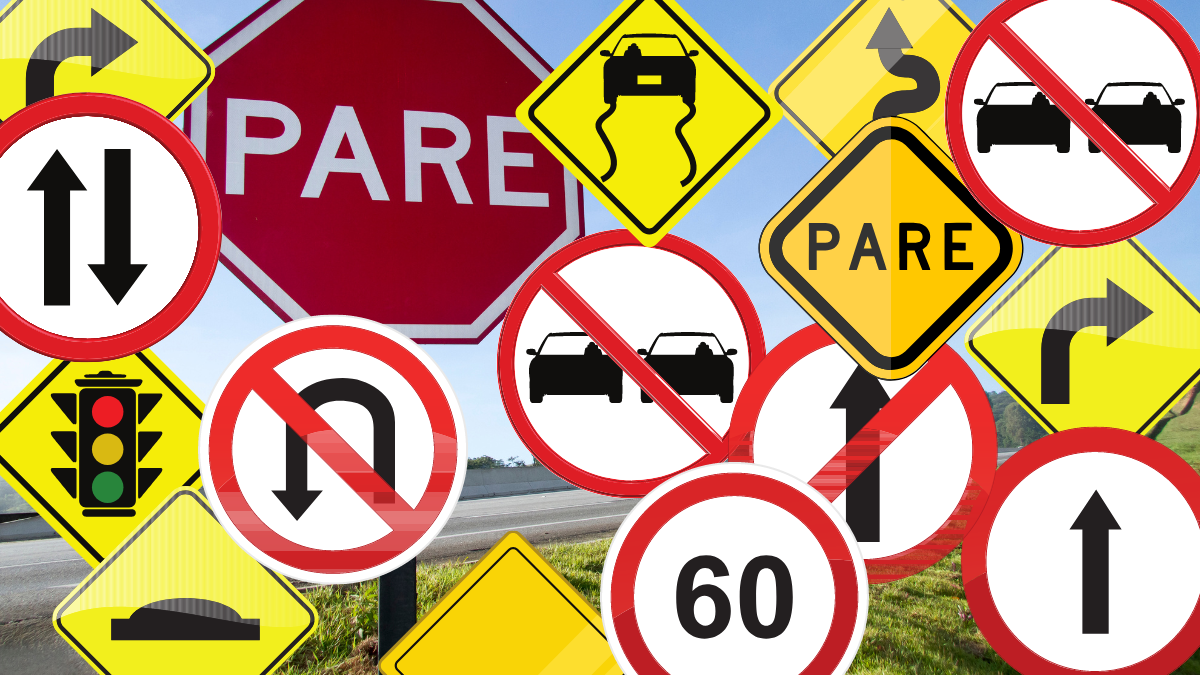
 When we talk about Traffic Signs, We are referring to a range of applications designed to meet regulatory requirements for drivers of cars, motorcycles, bicycles, pedestrians, and other special users.
The topic is broad, considering that the signs must be accessible and comply with municipal, state, and federal laws.
To the Traffic Signs or vertical signage are one of the main means of visual communication used in traffic, reflecting traffic rules and road conditions.
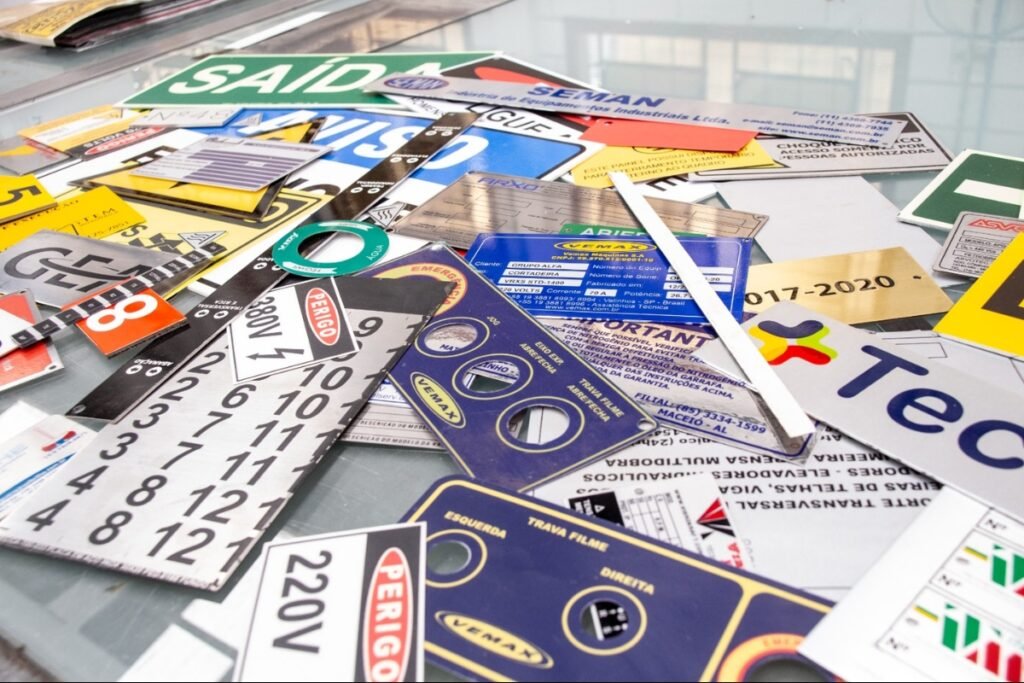
They are composed of plates or metal panels, wood, PVC or other materials, which feature written messages and/or graphic symbols indicating actions, prohibitions, restrictions, speed limits, directions, points of interest, and other relevant information.
To the Traffic Signs They are standardized and regulated by laws and regulations, and their use is mandatory on public roads. They are classified into different categories according to the message they convey, such as regulatory, warning, and informational signs.
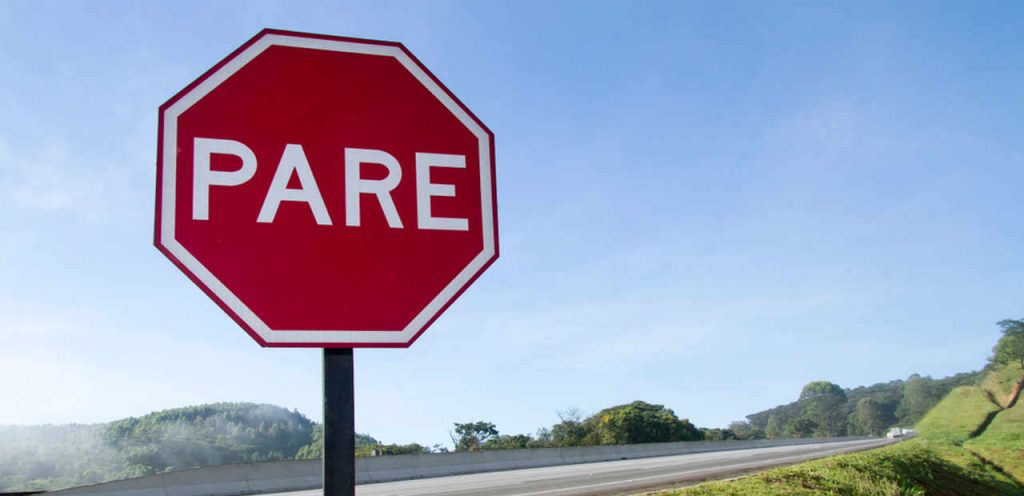
To the regulatory signs They provide information about the rules and obligations that road users must obey: speed limits, one-way streets, no parking, and others.
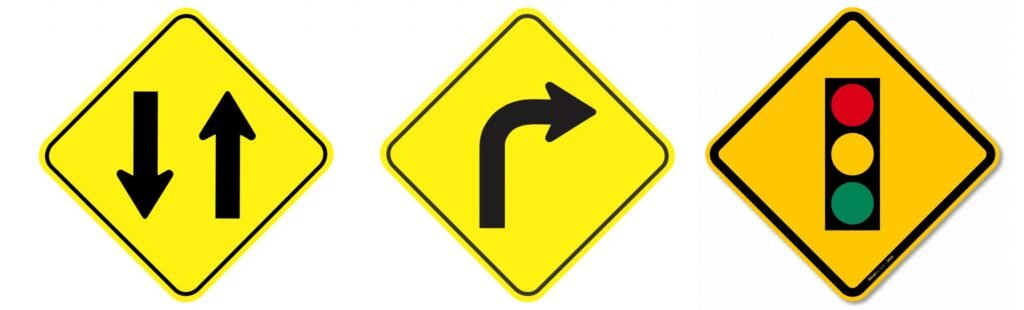
To the warning signs They alert users to dangerous or unusual road conditions, such as sharp curves, speed bumps, pedestrian crossings, animals on the road, and others.
As signage They provide information about directions, routes, destinations, and services available on the road, such as city information, emergency services, hospitals, and more.
Regarding size, they must be visible from an appropriate distance and angle, and be installed clearly and securely so that they can be easily identified by road users. It is important to respect traffic signs to ensure road safety and avoid fines and legal penalties.
Vertical signs, 
Horizontal signs, 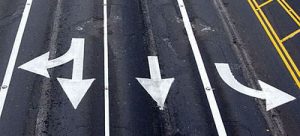
Auxiliary signaling devices, 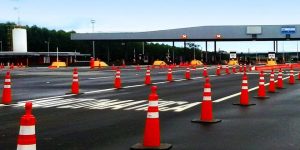
Luminous, 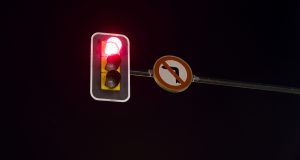
Sound signals and gestures from the officer and driver.’
Basically, they are rules of prohibitions, conditions, obligations, and restrictions.
Regulatory signs are white, red, and black.
Formats: circular,
Two exceptions:
This category includes 51 standard signs that may have supplementary information on rectangular signs attached to them or placed alongside them.
Additional signs are used to indicate the days of the week and times when a given space can or cannot be used for stopping or parking vehicles.
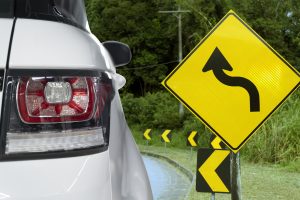
Colors: generally black and yellow, with only the addition of red and green on sign A-14, which indicates a traffic light, and with the exception of sign A-24, which indicates roadworks and is orange and black.
This standard format only changes in signs A-26a and A-26b, which are rectangular and indicate, respectively, one-way and two-way traffic, and in sign A-41, called "Cruz de Santo André" (St. Andrew's Cross), which indicates a railway line crossing with the road.
 The Traffic Code also stipulates that drivers who disregard road signs will be subject to traffic violations that can be classified as moderate, serious, or very serious.
Examples of this are the violations of article 181 for parking improperly or in a prohibited location and time.
This is without even mentioning the points that will be added to the driver's license of the offending driver, 4, 5, and 7 respectively.
Respecting traffic signs is more than just avoiding fines and points; it's everyone's duty to ensure safe traffic and reduce the number of accidents on the roads.