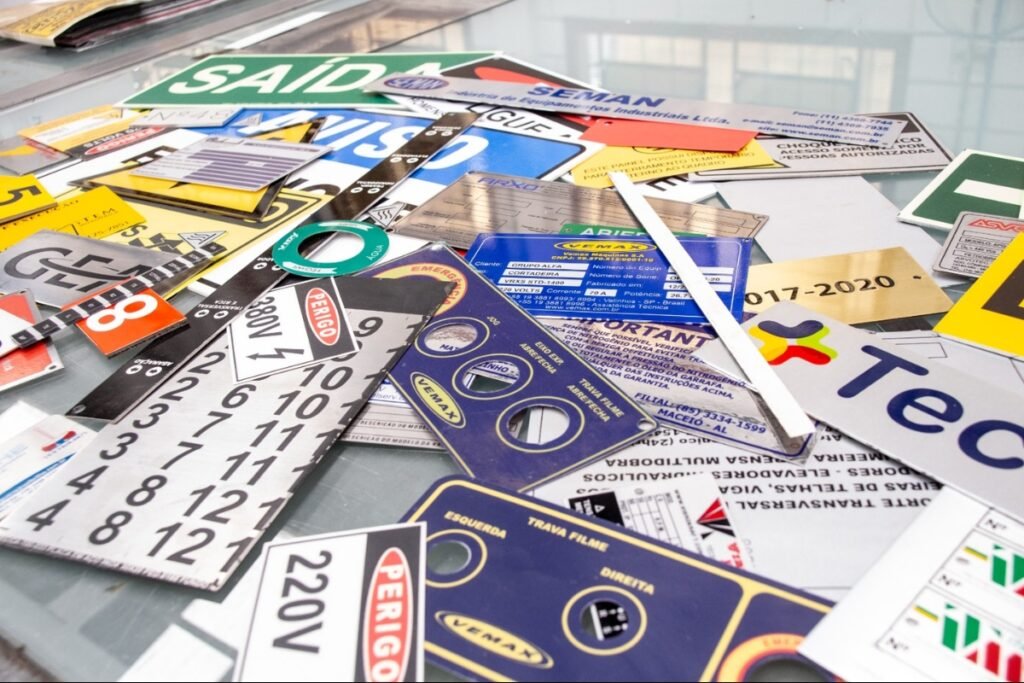
Safety Signage: Which Materials Does the Market Consume Most (and How to Choose the Right One)
Every serious company invests in safety signage. But between approving a budget and receiving the installed panels, there is a critical decision that many overlook: the choice of material.
Does it seem like a minor detail? It's not. The wrong material could mean an illegible sign in six months, a fine from the Fire Department, or, in the worst-case scenario, signage that fails precisely when it's most needed.
After decades of producing Signage for industries, condominiums and companies of all sizes, a CooperartsA clear pattern has emerged: four types of material dominate market demand. And each has its ideal "territory".
Let's go to them.
Materials that dominate the market
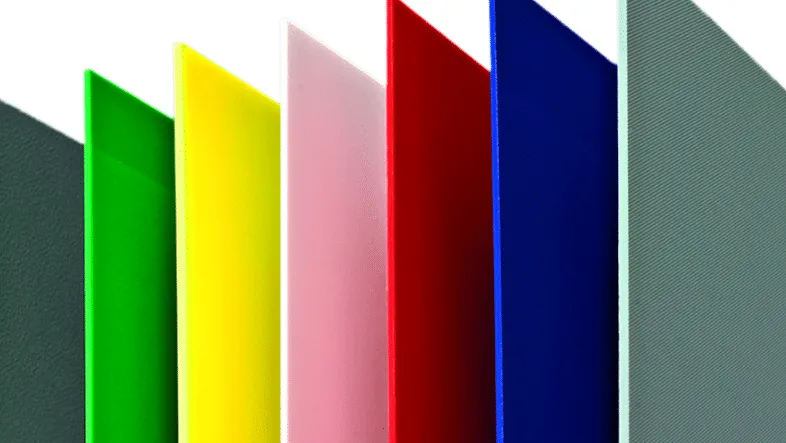
PVC and PS: The Darlings of Indoor Environments
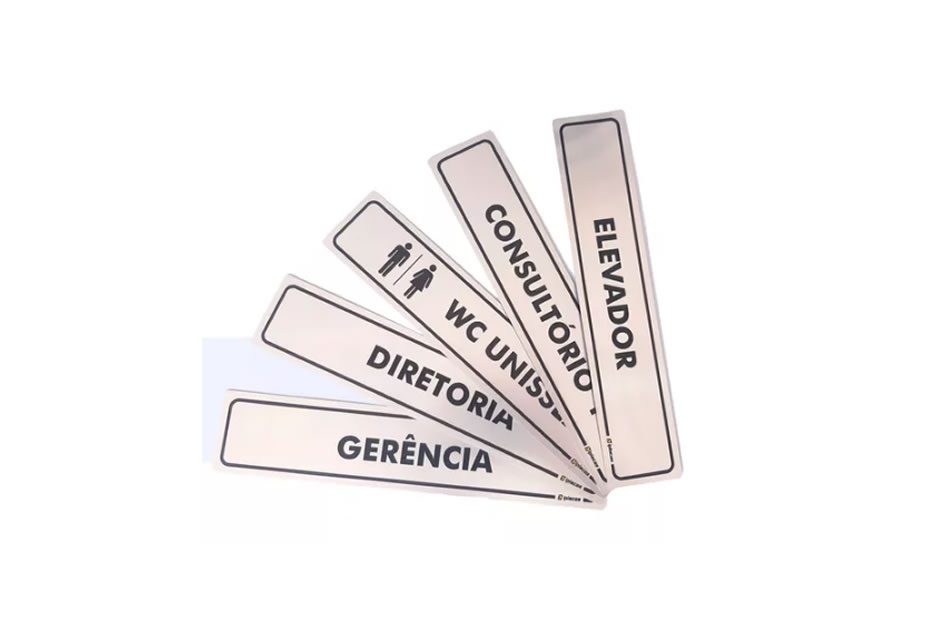
The scenario: You need to mark hallways, rooms, bathrooms, and administrative areas. The environment is covered, air-conditioned, or at least protected.
The solution: Rigid PVC or PS (Polystyrene) panels.
Why are they leading?
• Lightweight and practical: Easy to handle and install (often structural adhesive tapes are sufficient).
• Affordable cost: Ideal for large volumes of indoor signage.
• Versatility: They accept digital printing, custom cutouts, and various finishes.
• Where NOT to use: Outdoor areas exposed to direct sunlight or constant rain. Without adequate UV protection, the material may yellow and lose its printed information.
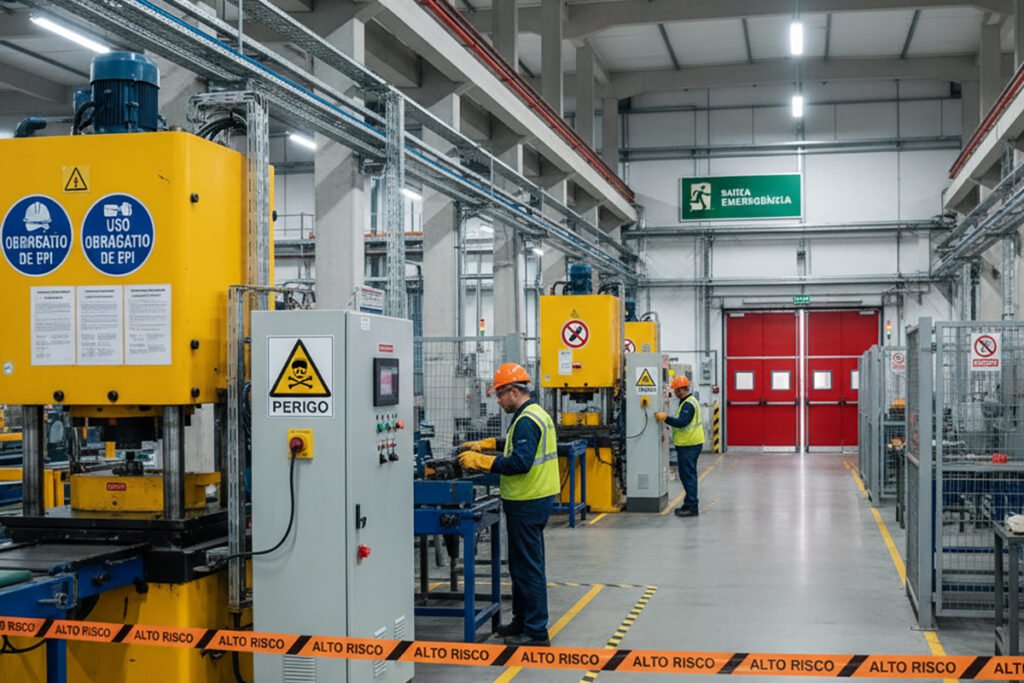
Common examples: “"Emergency Exit", "No Smoking", "Restrooms", "Use PPE"”
Photoluminescent Material: Required by Law
The scenario: The power went out. The building was plunged into darkness. How will people find their way out?
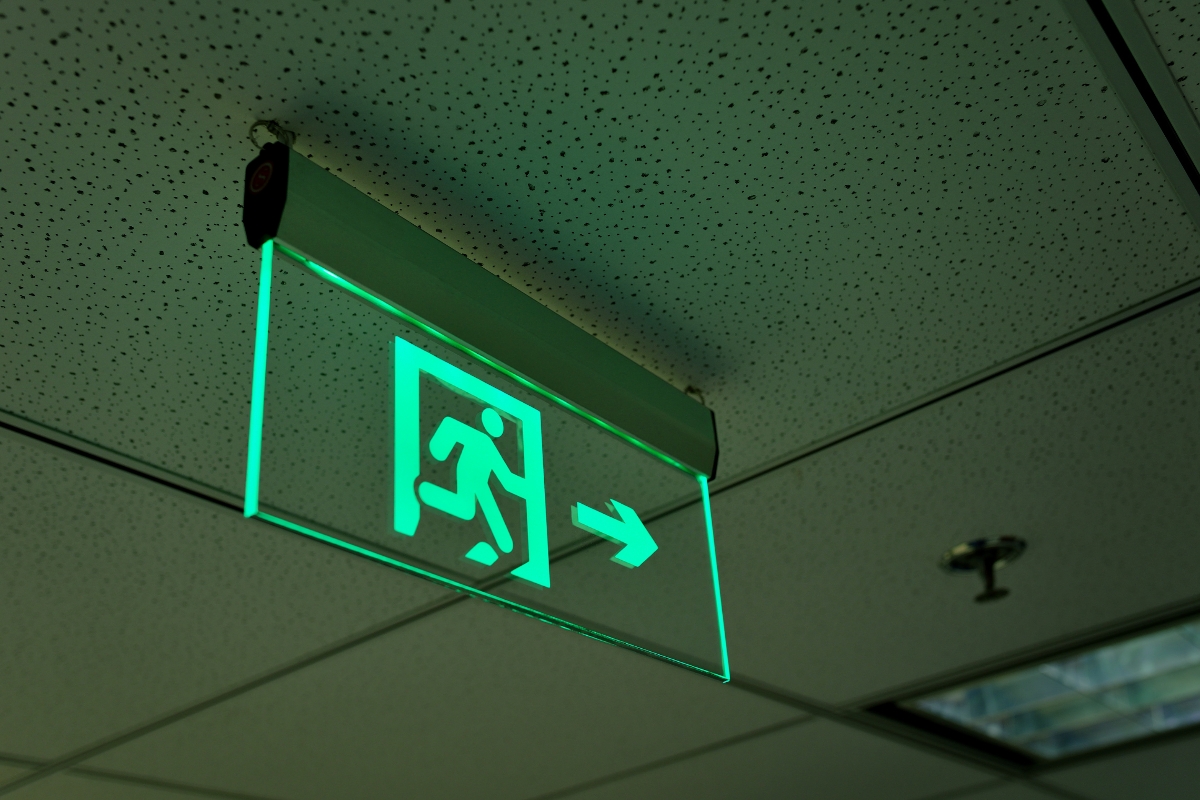
The solution: Photoluminescent signage.
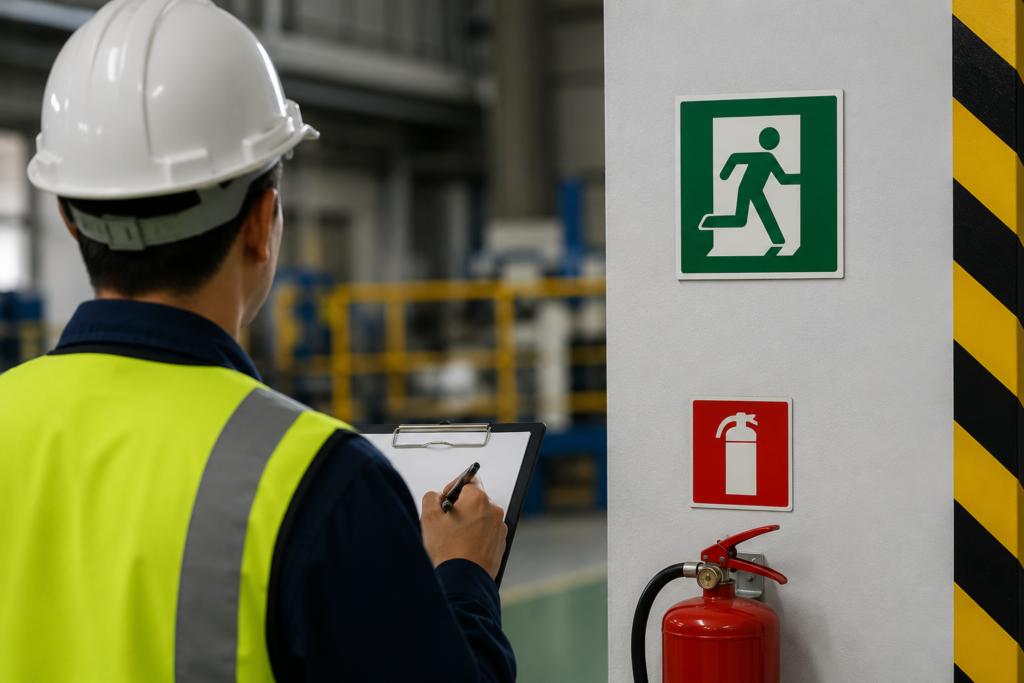
• Why is it consumed in large quantities? Simply put: it's a requirement of ABNT NBR 13434-3 standard. Every fire prevention and fighting project approved by the Fire Department requires signs that... “"They glow in the dark.".
This material absorbs light (natural or artificial) It glows during the day and emits luminescence for hours in the total absence of electrical power.
• Where it is mandatory: Escape routes – Firefighting equipment (extinguishers, hydrants, alarms) Fire doors Emergency stairs
Careful: Not all "glow-in-the-dark" products are certified. Materials that do not meet specifications may fail inspection.
Aluminum and ACM: Shielding for Hostile Environments
The scenario: Does your company have outdoor areas, industrial yards, contact with chemicals, or extreme temperatures?.
The solution: Aluminum or ACM (Aluminum Composite Material) signs.
Why do they resist?
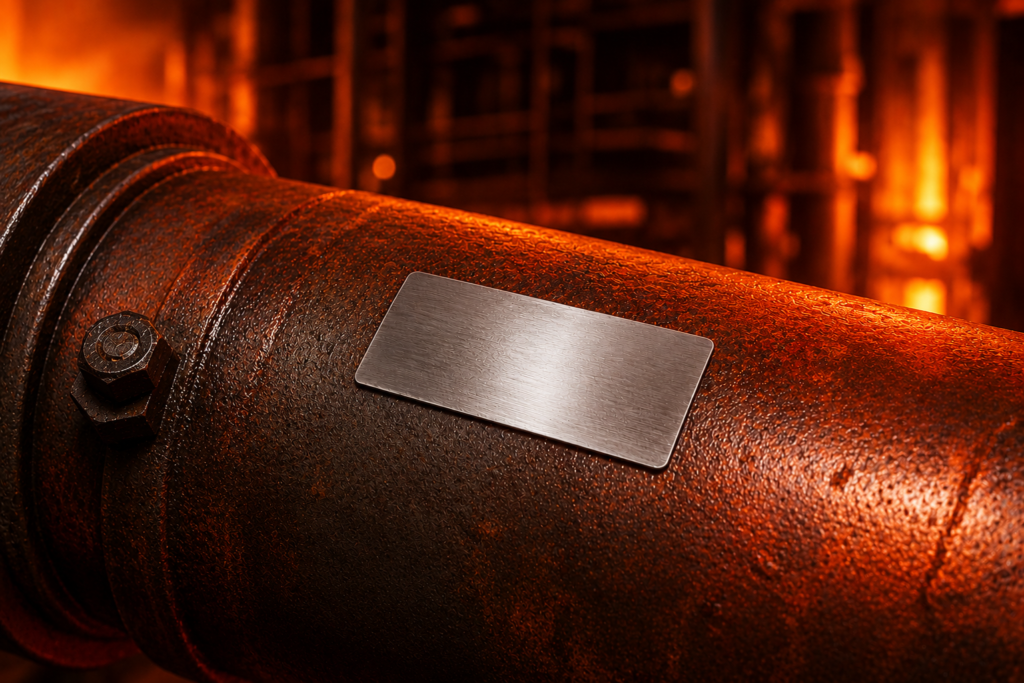
• Extreme durability: They don't rust, they don't fade easily, and they don't warp in the heat.
• Chemical resistance: Ideal for industries with acidic vapors, solvents, or saline environments (sea air).
• Longevity: The initial investment is higher, but the lifespan makes up for it. An ACM panel can last 10+ years without needing replacement.
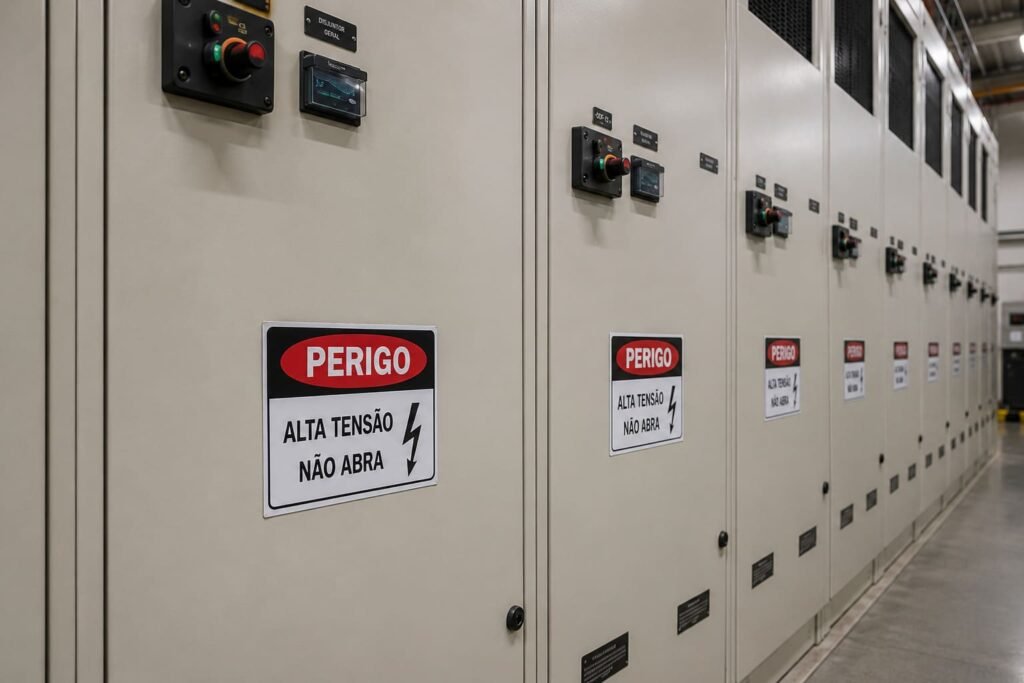
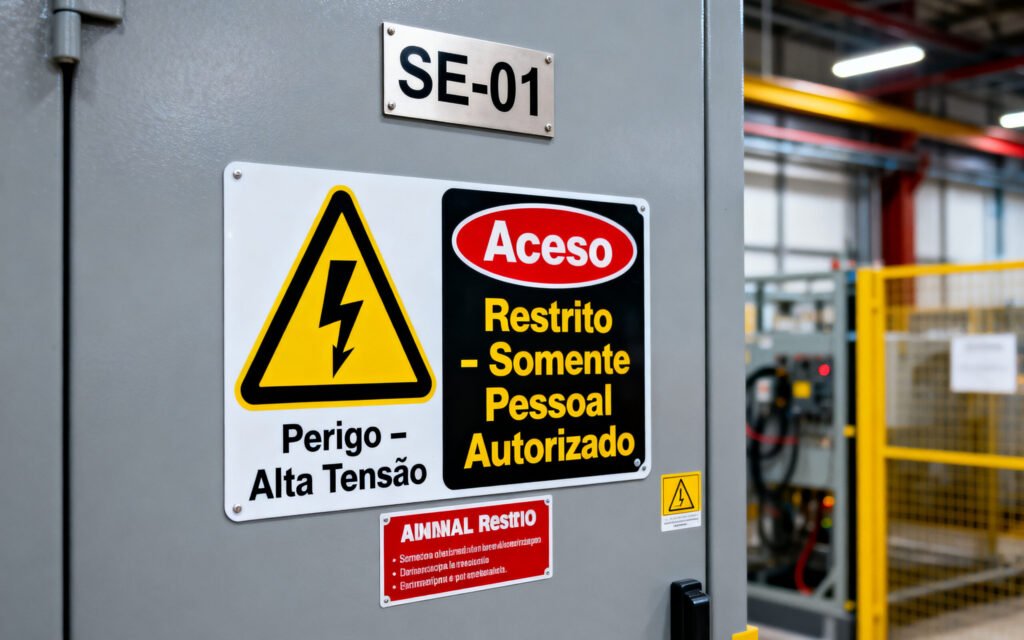
• Where to use: Electrical substations Loading and unloading yards Facades and areas constantly exposed to harsh weather conditions. – Internal road signage for industrial plants
• Tip from Cooperarts: For heavy industrial environments, ACM surpasses plain aluminum in flatness and finish.
The scenario: You need to mark pipes, demarcate floors, and apply warnings to uneven surfaces or glass.
The solution: High-performance adhesive vinyl.
Why is it consumed so much?
• Total flexibility: It adheres to virtually any surface (metal, glass, concrete, textured walls).
• Quick application: No drilling or mounting structures required.
• Cost-benefit ratio: Especially in large areas, such as land demarcation.
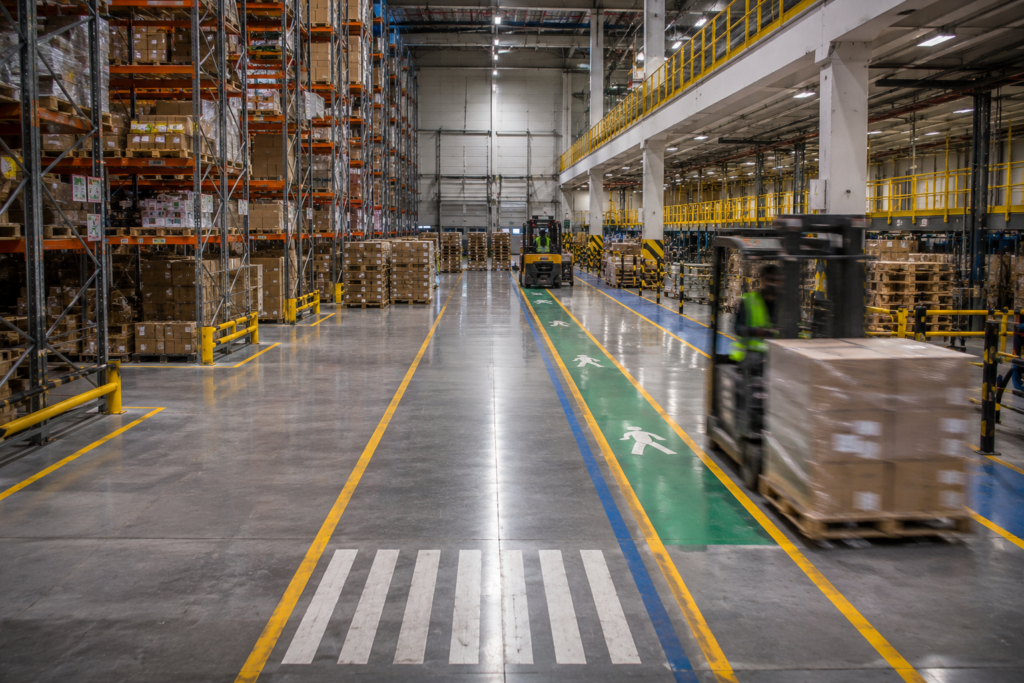
• Popular applications: – Identification of industrial pipelines (water, steam, gases, chemicals) Floor markings (safety lines, restricted areas) – Signs on glass doors (“Push”, “Pull”, “Automatic”) – Quick customizations on equipment
Attention: For environments with frequent chemical cleaning, specify laminated vinyl (with extra protective film).
The Mistake That Costs a Lot (and Puts Lives at Risk)
• Here's a real-life situation we see frequently:
A company buys panels made of standard PS (that cheap, white material) and installs them outdoors, exposed to the sun. Six months later, the "Escape Route" signs are yellowed, cracked, and illegible.
Result:
• Financial: Money wasted + replacement cost. • Legal: Fine or failure in the fire department inspection. • Security: In a real evacuation, signage doesn't fulfill its purpose.
The lesson? Using the wrong material isn't saving money. It's waste with added risk.
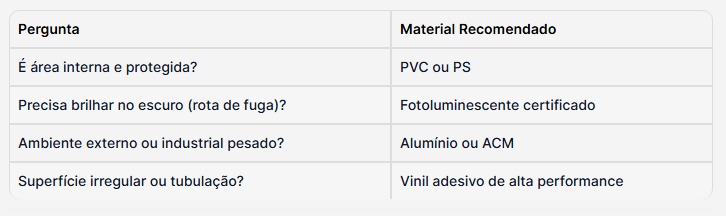
How to Choose? A Quick Checklist
Conclusion: The Right Material = Safety + Savings
In the safety signage market, there is no single "best" material. There is only the right material for each situation.
• PVC It dominates in volume because it effectively serves most internal corporate environments.
• Photoluminescent absolute rule prevails in accordance with the law.
• The ACM It is the champion of durability in extreme conditions.
• Vinyl It's the versatile wildcard for special applications.
In Cooperarts, The Carboni family's experience is at your disposal to ensure that you not only buy signs, but invest in signage that works, lasts, and protects.
Talk to Our Team
Questions about technical specifications? Need consulting services to comply with standards? Speak to someone who has understood this subject for decades.