When every second counts, signaling Proper evacuation routes can be the difference between life and death. Discover how to create evacuation routes that actually work.
Data from the Fire Department reveals that more than 701,300 deaths in fires could be avoided with adequate evacuation routes. marked. It's not just about complying with regulations or avoiding fines – we're talking about saving lives. An efficient evacuation route is a complete system that includes visible signage, emergency lighting, unobstructed pathways, and doors that open in the correct direction. In panic situations, people need to know exactly where to go, without thinking, without doubt.
NBR 13434: The Universal Language of Colors
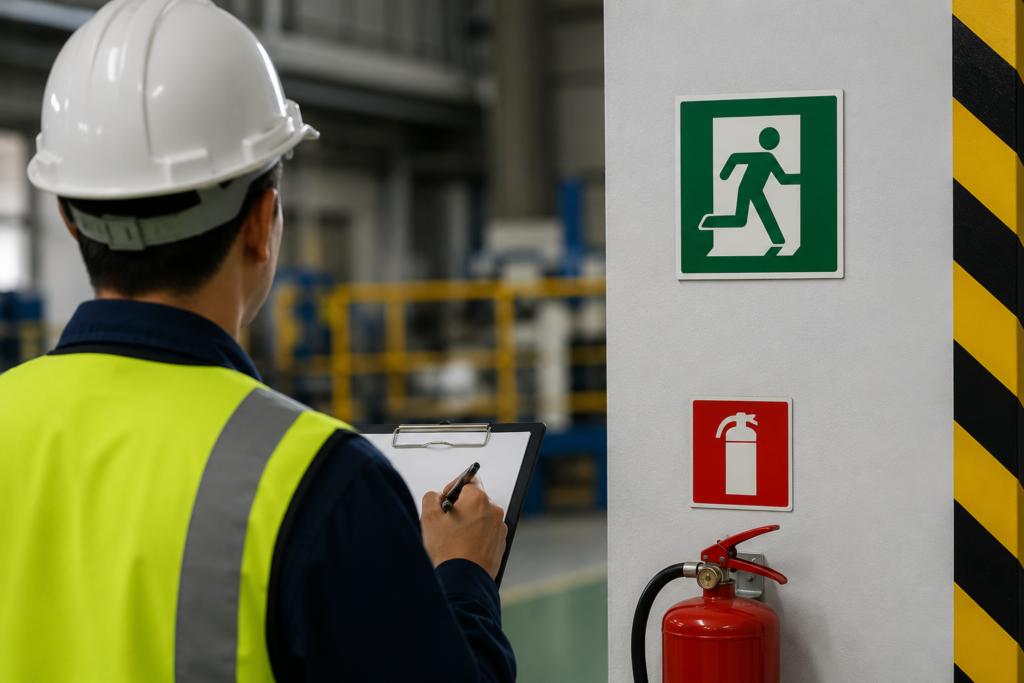
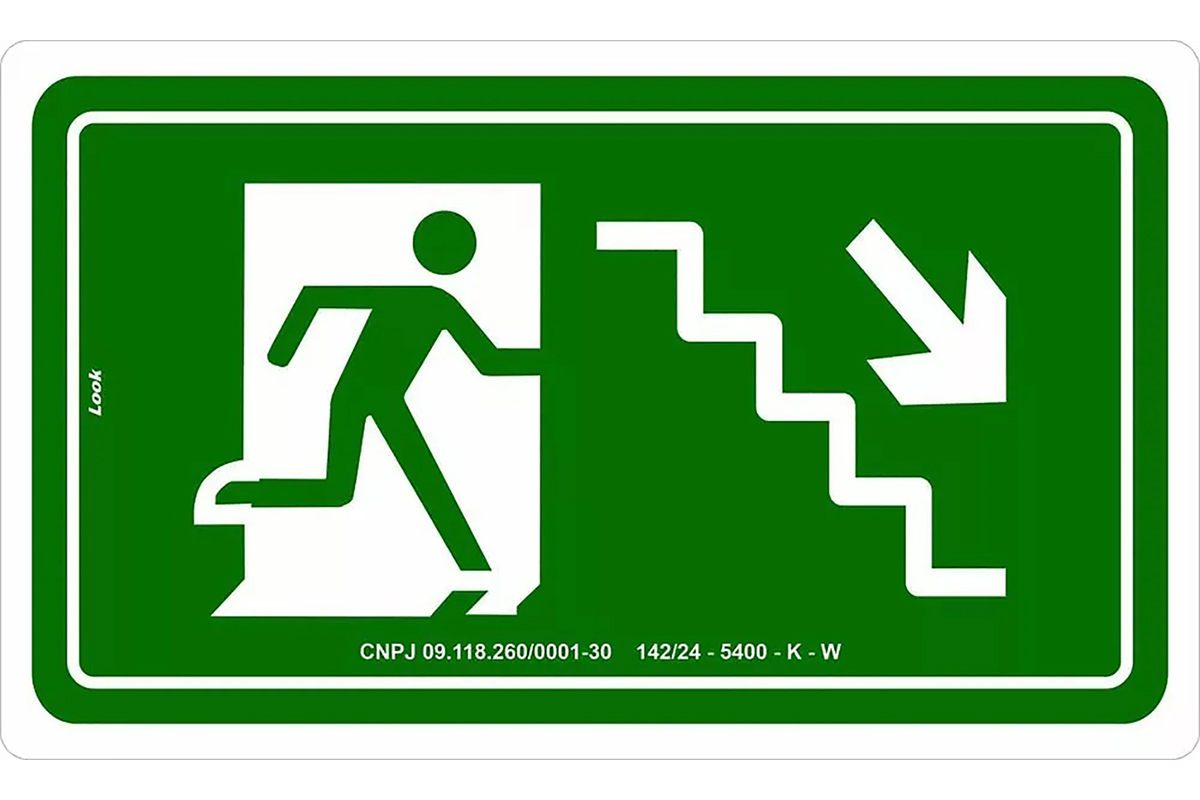
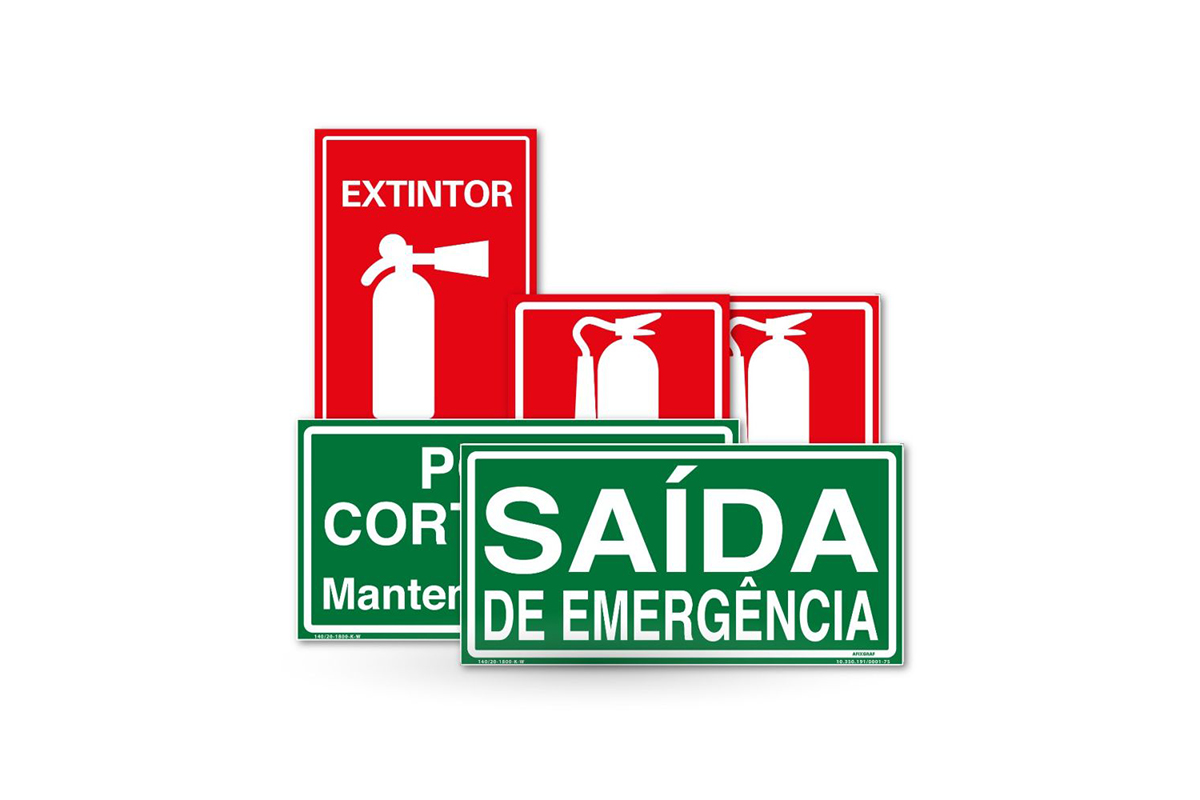
This standard establishes a simple and effective system: Green means rescue (exits and escape routes), Red indicates firefighting equipment (fire extinguishers and hydrants), Yellow warns of risks, and Blue signals obligations. Why? Because in emergency situations, our brain processes colors much faster than words. Seeing something green automatically means “security this way".
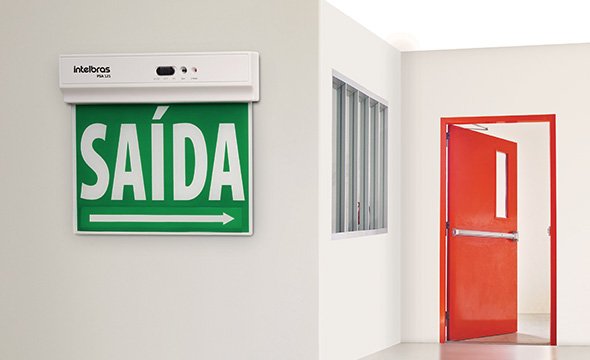
Think of it this way: lighting emergency These are the car's headlights (they illuminate the road), photoluminescent signage is the road signs (they indicate the direction). You need both! lighting ensures visibility during the critical early stages, while
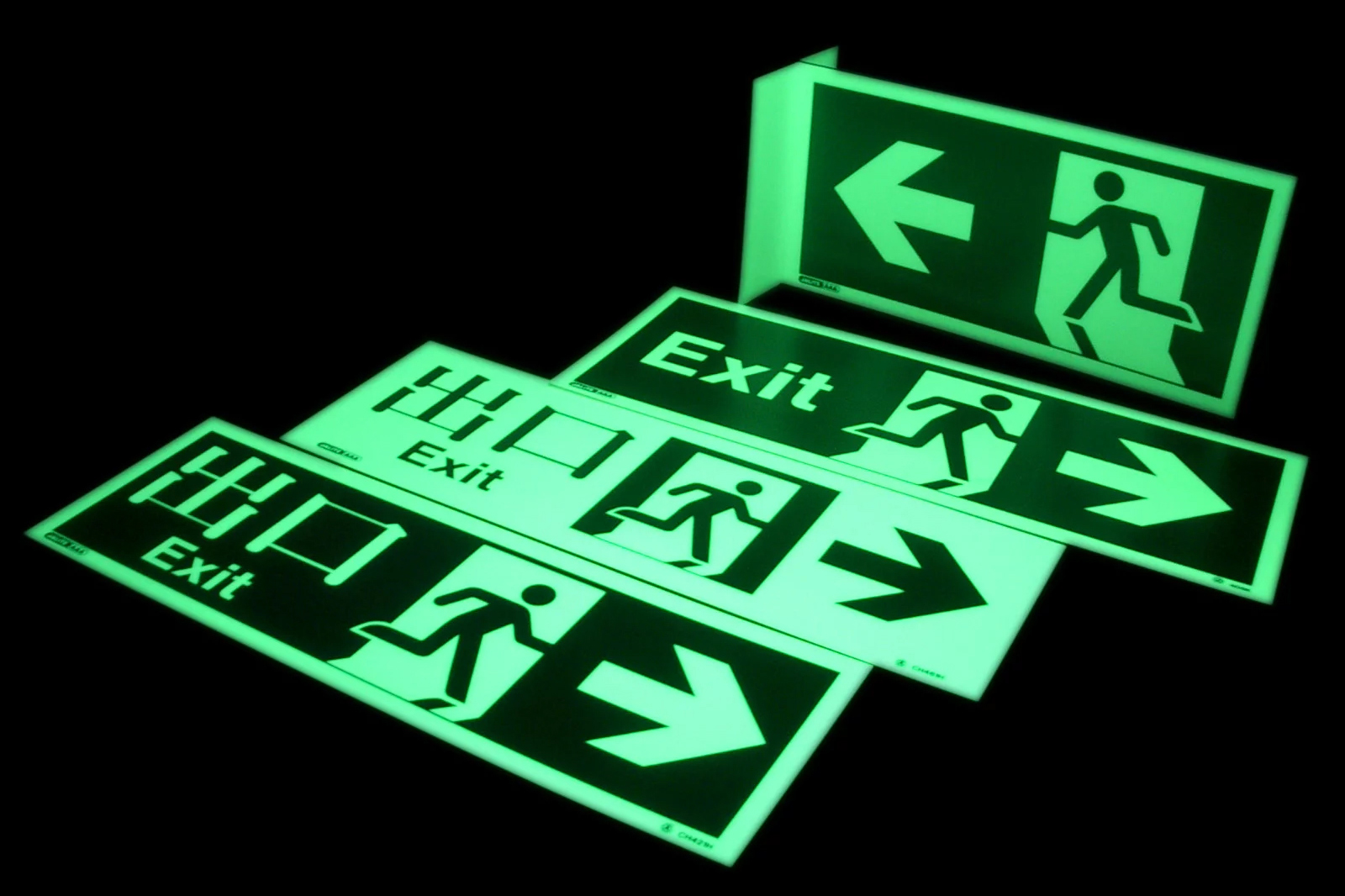
a photoluminescent signage It functions as a foolproof backup, lasting 15 to 25 years without maintenance. A typical 40-meter corridor requires approximately 4 emergency lights + 8 photoluminescent panels + strips at the baseboard.
Two Systems, One Mission
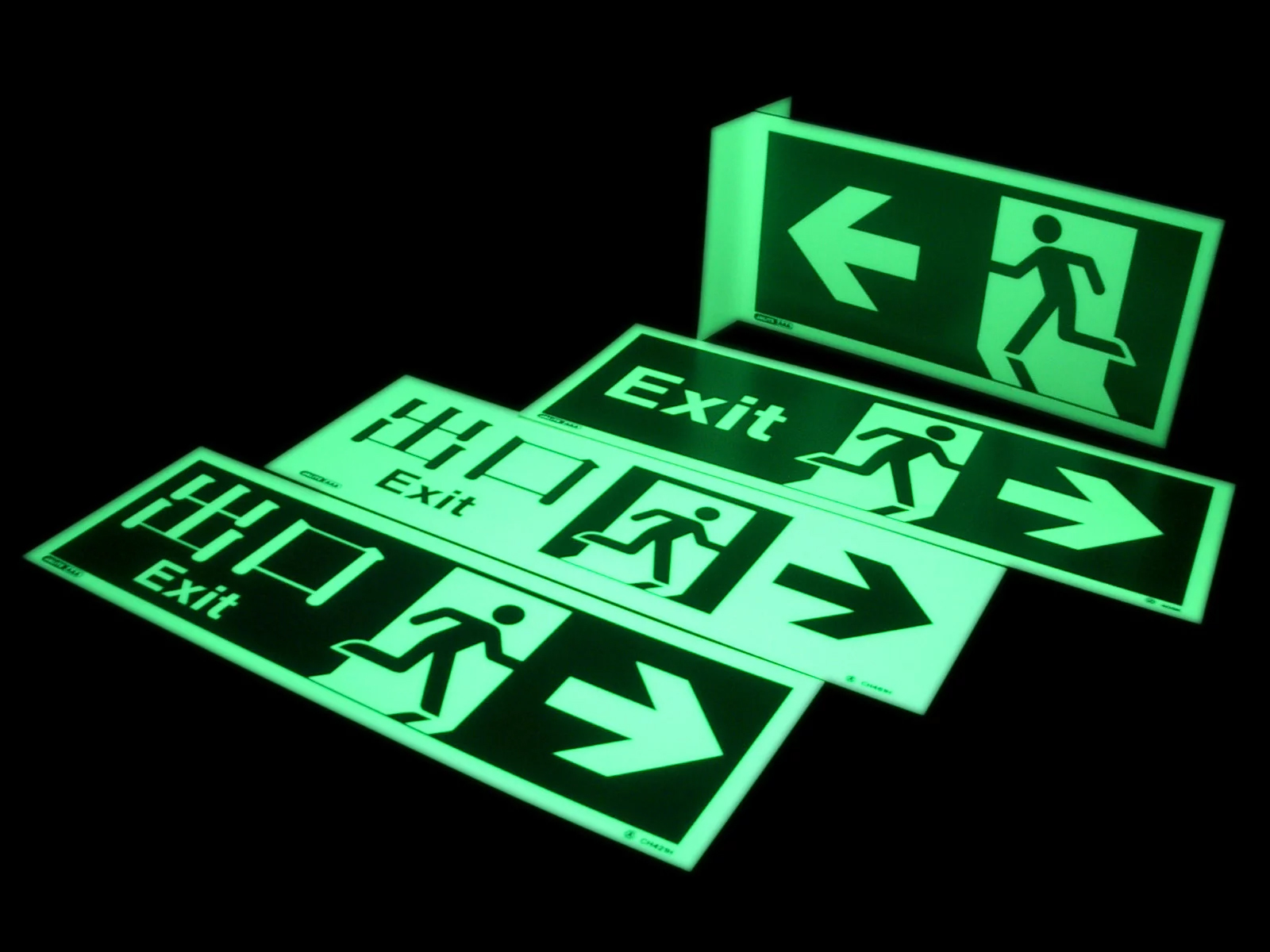
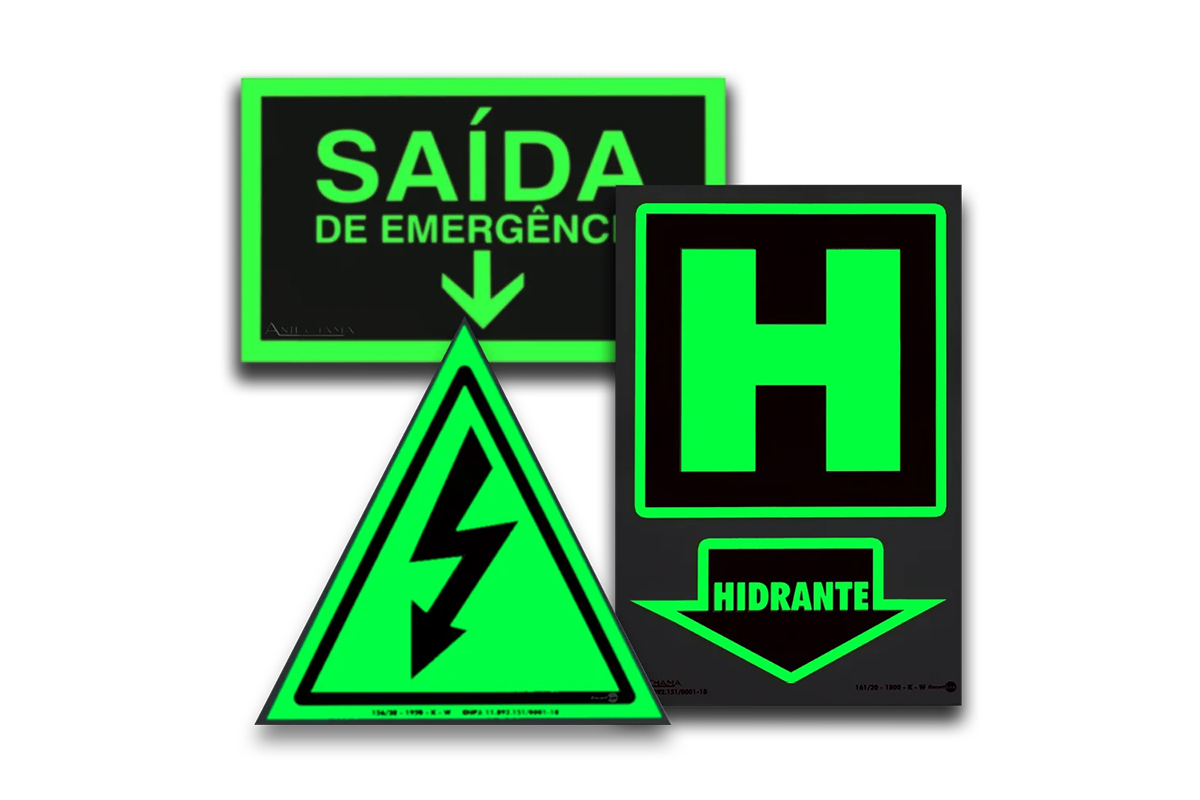
Many people confuse them, but they are complementary technologies. A lighting emergency It works with batteries that automatically kick in when there's a power outage, illuminating large spaces and allowing people to see obstacles. As for the signage... photoluminescent These are the panels that "glow in the dark"—they absorb light during the day and gradually release it in the dark, without needing electricity or batteries.
Think of it this way: lighting emergency These are the car's headlights (they illuminate the road), photoluminescent signage is the road signs (they indicate the direction). You need both! lighting It ensures visibility in critical early moments, while photoluminescent signage acts as a foolproof backup, lasting 15 to 25 years without maintenance. A typical 40-meter corridor requires approximately 4 emergency lights + 8 photoluminescent signs + strips at the baseboard.
Before anything else, map out all exits, stairwells, hazard areas, and places where people congregate. Use the building plans or make a simple sketch marking doors leading to the outside, stairwells, kitchens, storage areas, and where people tend to gather. Key question: If the power went out right now, would everyone know where to run?
Use the formulas for each type of environment: offices = 1 person per 7m²; classrooms = 1 person per 1.5m²; shops = 1 person per 3m²; restaurants = 1 person per m². This determines how many and how wide your exits should be. A 500m² office has approximately 71 people, requiring doors with a total width of at least 1.20m.
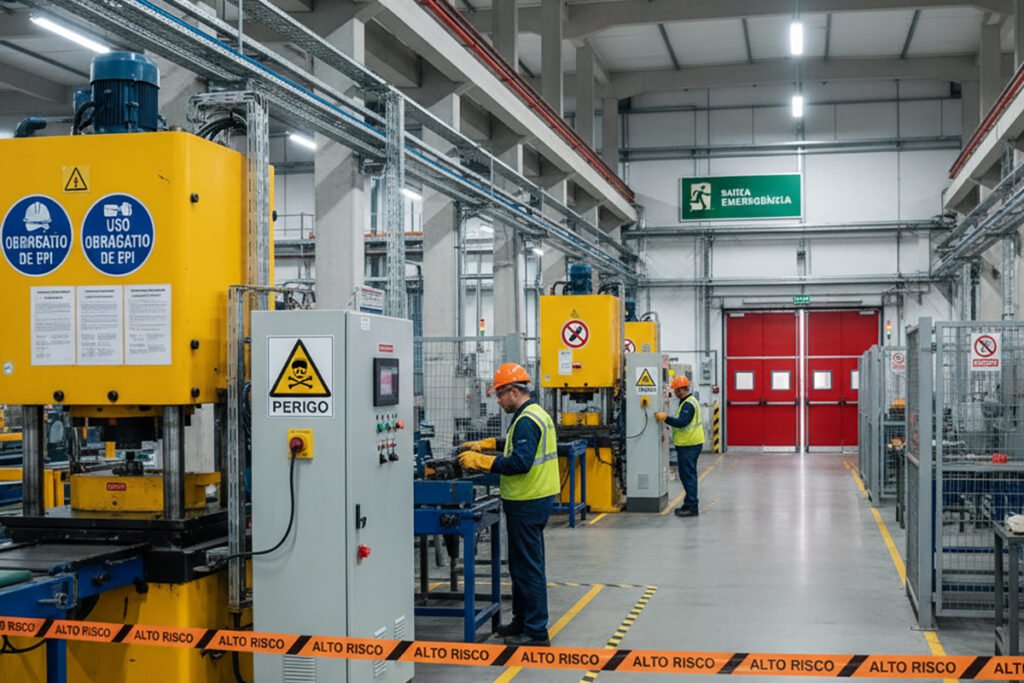
In a panic, people look for the most obvious path, not the safest one. Their routes should be simple (without many turns), short (respecting maximum distances), visible (signage every 5-7 meters), and free of obstacles (no boxes, furniture, or "just for today" signs). Whenever possible, create alternative routes – if one becomes blocked, people have somewhere to go.
Install "Emergency Exit" signs every 5-7 meters, at a height of 1.80m (or suspended above 2.50m). Use clear directional arrows and place signage above all exit doors. Don't forget the stairs – mark the first and last of each flight with photoluminescent strips. And always, always keep the evacuation plans ("You Are Here") updated in visible locations.
What good is having the best system in the world if nobody knows how to use it? Conduct evacuation drills at least twice a year. Test the... lighting emergency Monthly (30 seconds of operation) and annually until fully discharged. Document everything – it's mandatory for the Fire Safety Certificate (AVCB). And remember: replacing batteries every 3-5 years is an investment, not a cost.
World Trade Center (2001): Photoluminescent Signage Saved Thousands
When the planes hit the towers, the power went out instantly. But 16,000 people were successfully evacuated before the collapse, largely thanks to... photoluminescent signage which remained visible in the darkness and dense smoke. The luminescent strips on each step of the stairs guided people during hours of descent. This tragedy changed standards worldwide – today, class P1A photoluminescent signage is mandatory in tall buildings.
After major tragedies like the Kiss nightclub fire (2013), it became clear: signaling Inadequate evacuation routes, blocked routes, and lack of training are a deadly combination. Companies that invest in proper evacuation systems not only comply with the law – they demonstrate that they value human lives above all else.
You don't need to wait for a complete project to start improving security:
Creating efficient evacuation routes is neither complex nor expensive – it's a matter of planning, knowledge, and, above all, the will to do the right thing. The regulations exist because they were written with the blood, sweat, and tears of past tragedies. Each article, each measure, each technical specification has a life story behind it.
The question isn't "is it worth investing in this?". The question is: "how much are the lives of the people who frequent my establishment worth?"“
Do you need professional help?
A Cooperarts is an expert in safety signage We can help your company create a complete evacuation system, from technical design to installation and maintenance. Contact us and schedule a free assessment.
📞 Talk to our experts
Because when it comes to saving lives, you can't take risks with amateurs.
👉 Download our Complete Safety Checklist in PDF format for free.
👉 Request a free quote
👉 Schedule a free technical consultation
This article was developed based on current Brazilian technical standards (NBR 13434, NBR 10898, IT 11) and documented real-world cases. The information is up-to-date, but we recommend consulting qualified professionals for specific projects.