3 factors that influence the type of raw material for signage.
The suitability of a particular type of signage application depends on the type of environment and surface. In the projects of Cooperarts, We evaluated three aspects to understand what the best solution will be:
Factor 1: Environment exposed to harsh weather conditions
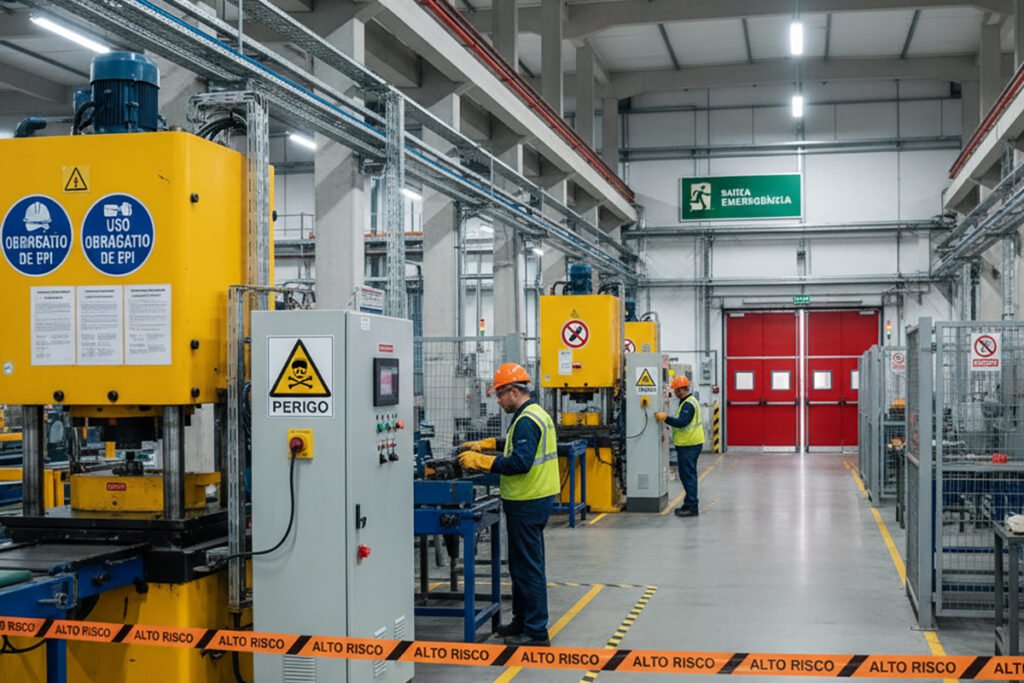
In this regard, it is necessary to assess whether there are adverse weather conditions in the surrounding area where the sign or label is located. signaling It will be exposed. This condition will determine what type of material is needed. These are generally outdoor environments exposed to rain, intense sun, wind, and other conditions such as salinity.
In these cases, it is recommended to use more durable and resistant materials such as PVC, acrylic and metallic materials, printed using the process of... Silk Screen.
Environment exposed to the elements
Factor 2: Environment with exposure to temperatures
In environments exposed to high (hot) or low (cold) temperatures, the use of materials such as polyester and polycarbonate is recommended. The composition of these materials is resistant to high temperatures (ovens, motors, electronics) or cold temperatures (freezers, cold rooms, chillers, etc.). It is worth noting that in both conditions, polyester and polycarbonate still maintain excellent print durability.
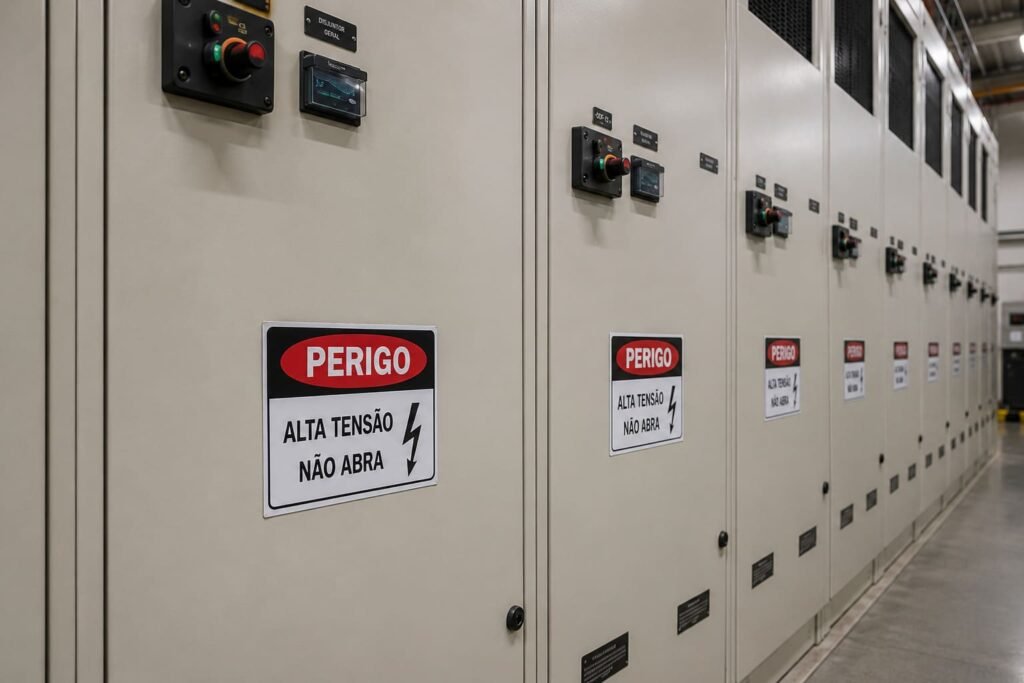
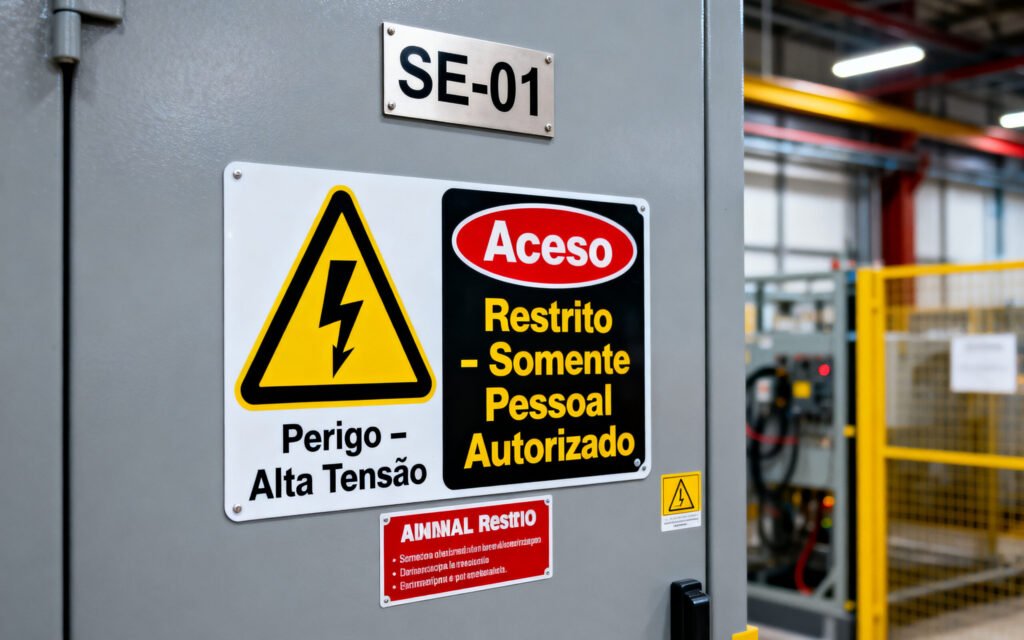
Regarding high temperatures, in factories, power plants, laboratories, or places where machines generate intense heat, the use of metallic materials is also commonly recommended.
Plates and labels of signaling Made of aluminum, they are heat resistant and can withstand high temperatures without significant deformation or damage.
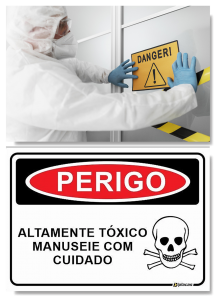
Factor 3: Environments with exposure to toxic products.
In toxic environments where chemicals are stored, such as industrial facilities or chemical laboratories, it is essential to select materials that are resistant to aggressive chemicals. PVC is a material frequently used for signage in these conditions.
PVC is resistant to many chemicals and has properties that make it a suitable choice for environments where there is a risk of exposure to hazardous and corrosive substances.
Conclusion
The type of signaling The recommended approach may vary depending on the specific conditions and challenges encountered in each environment. Safety will always be the most important factor in any project. signaling.