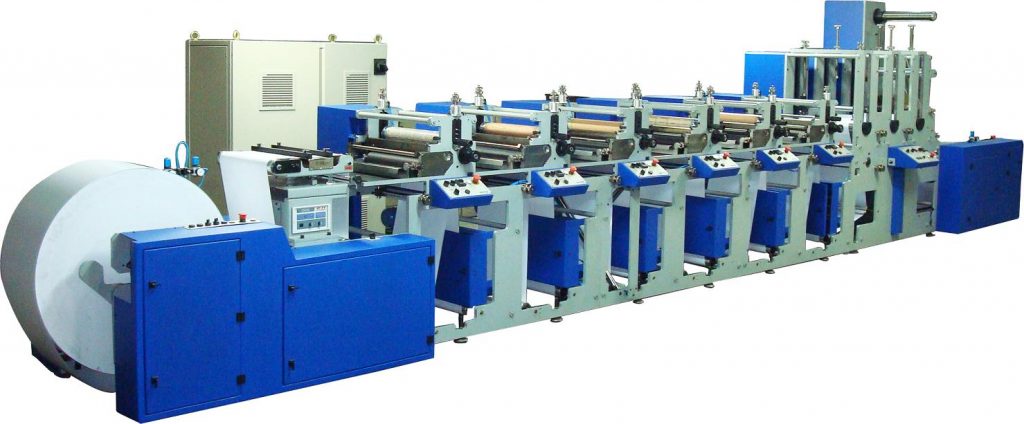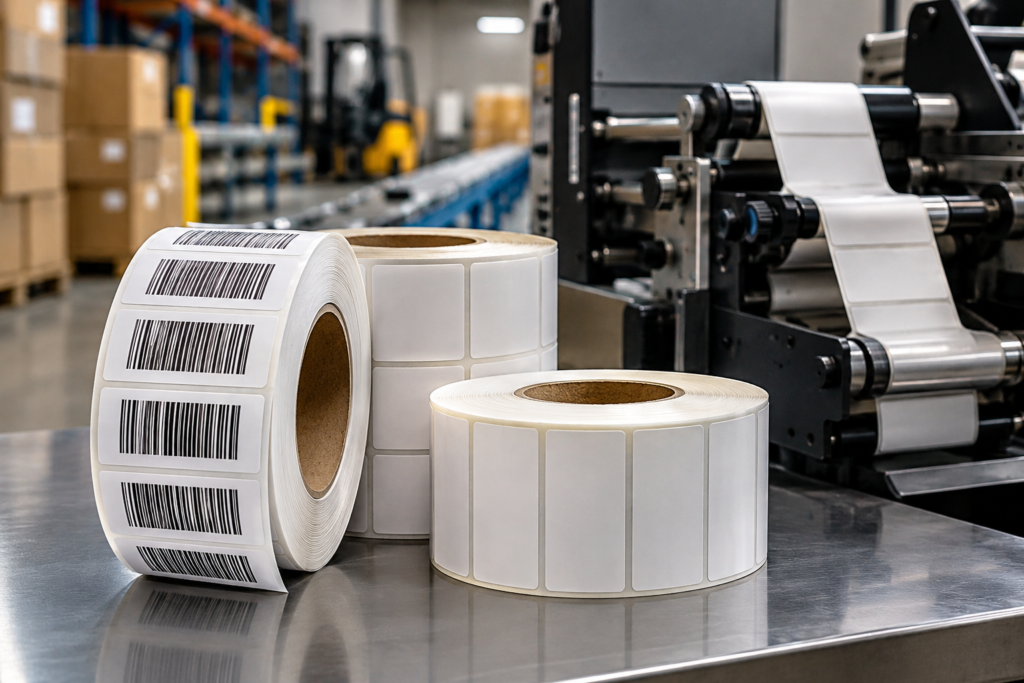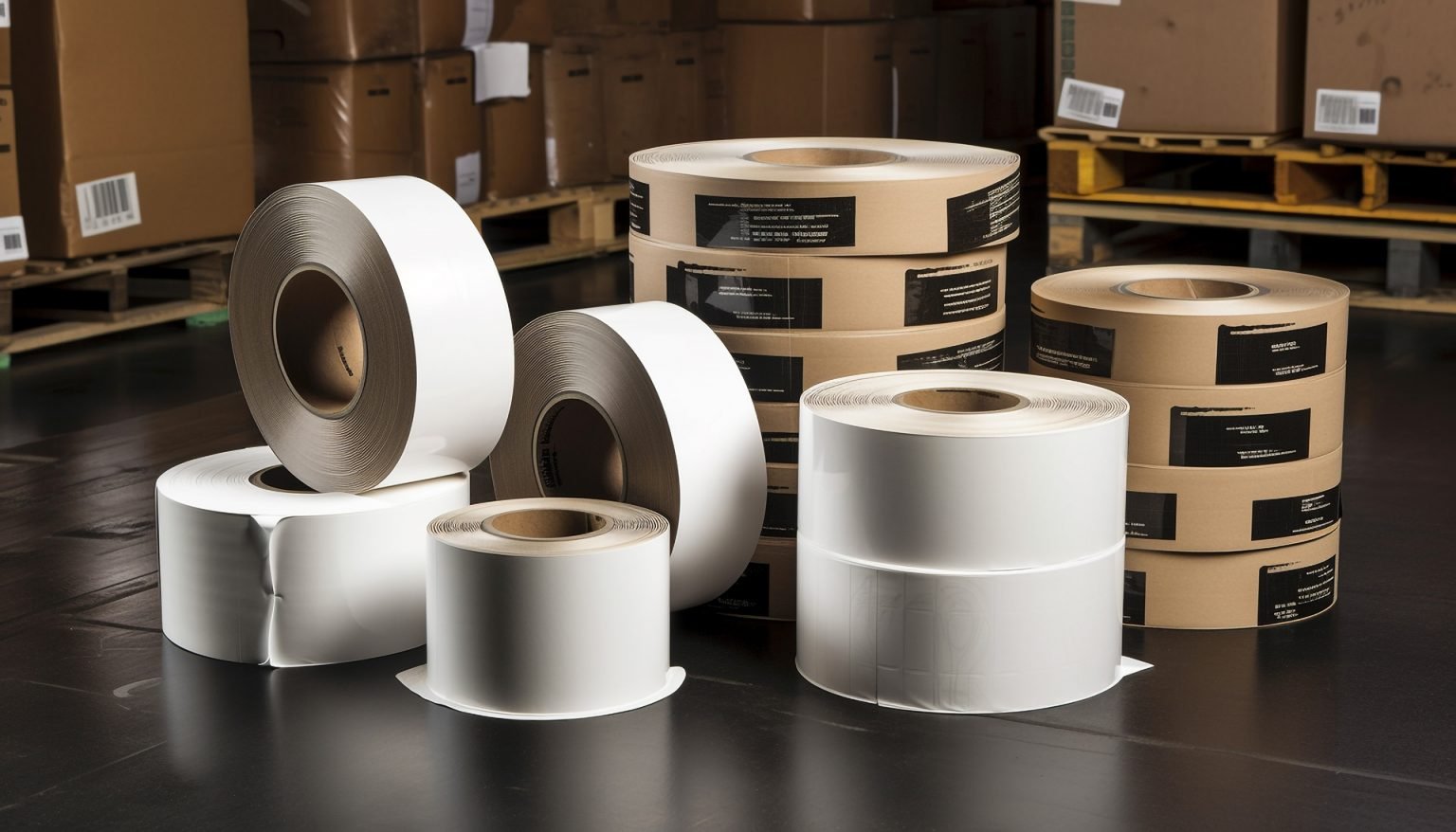
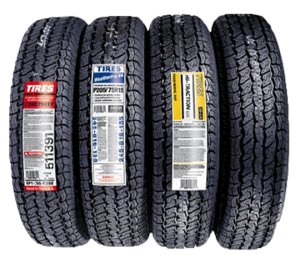
 the term Roll Labels refers to adhesive labels These labels are produced and supplied in continuous rolls. They are commonly used in various applications, and the roll format facilitates quick and efficient application in different contexts.
Considering that this technology allows for product labeling in a wide variety of sectors, such as food, beverages, pharmaceuticals, electronics, clothing, and much more, the presence of Cooperarts Being located in a diversified industrial hub facilitated the company's presence in various segments.
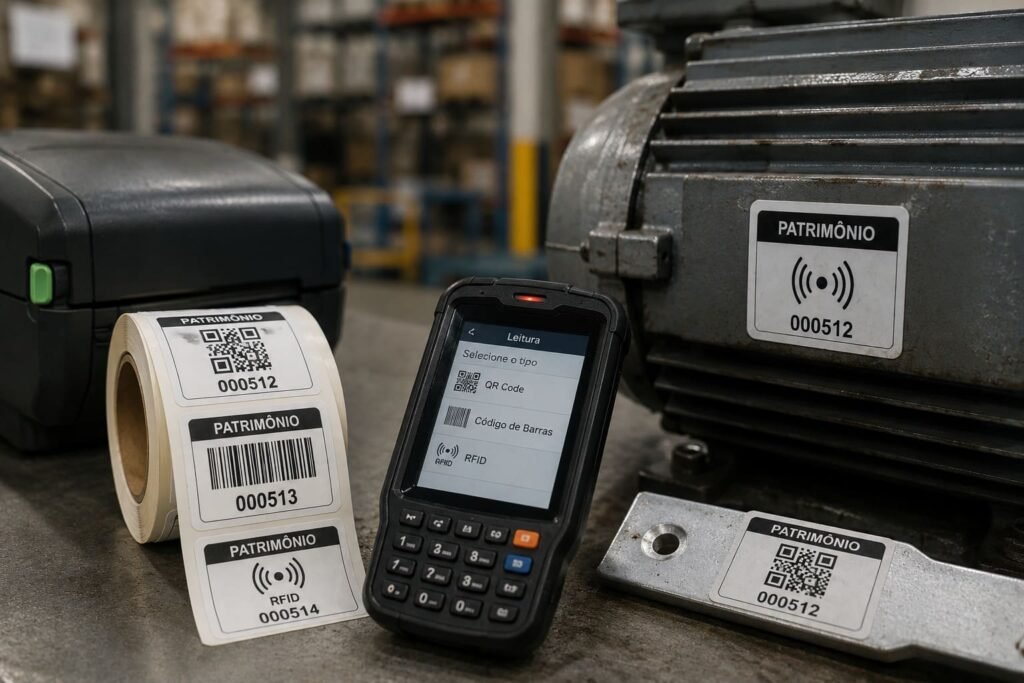
Imagine that the roll labels They may contain information such as barcodes, serial numbers, expiration dates, and product information.
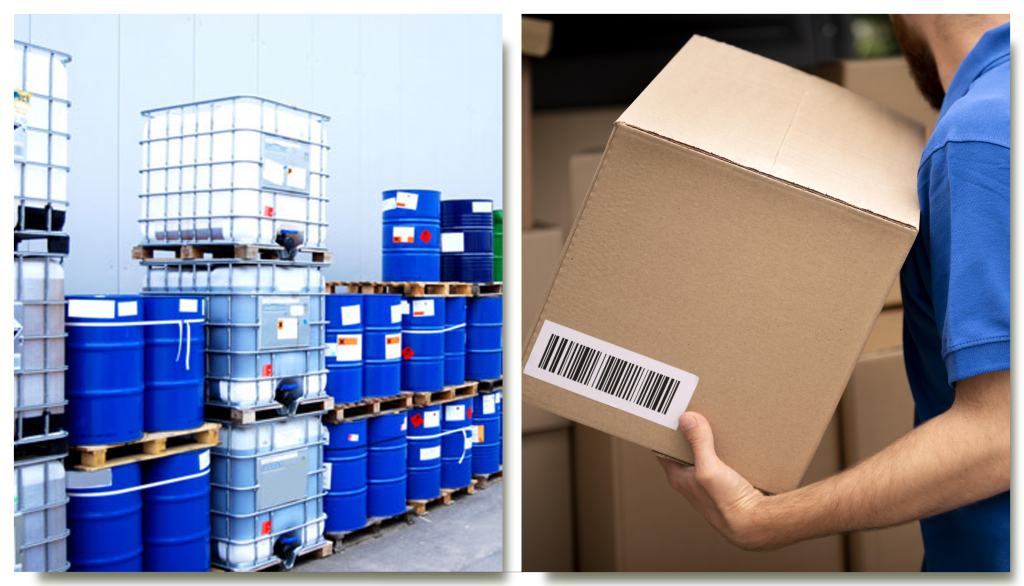
These labels are used to identify boxes, pallets, and goods during transport and logistics. They help track items and facilitate inventory management. As traceability becomes more relevant, this solution gains traction.
In addition to logistics, the Roll labels They are ideal for automatic labeling machines in production lines, where they are quickly applied to product packaging.
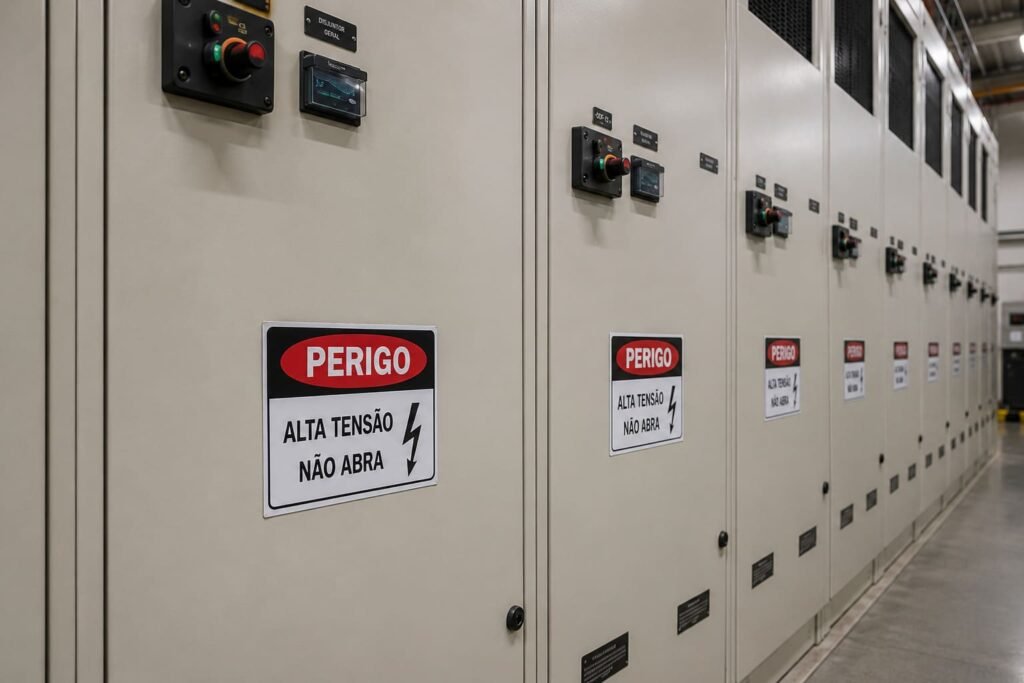
What caught our attention was its constant and continuous use across various product and service sectors, such as tire identification, chemical products, logistics, and others.
Customers of Cooperarts They also attract attention in retail. They are widely used in retail to mark products with prices and barcodes.
Learn more about the process of Flexography, Inkjet printing is a printing method commonly used in the graphic arts industry to print on a variety of substrates, including paper, cardboard, plastic, canvas, adhesive labels, and more. It is especially suitable for printing large volumes of material, such as packaging, labels, and parcels.