Signage on Electrical Panels: What Cannot Be Missing
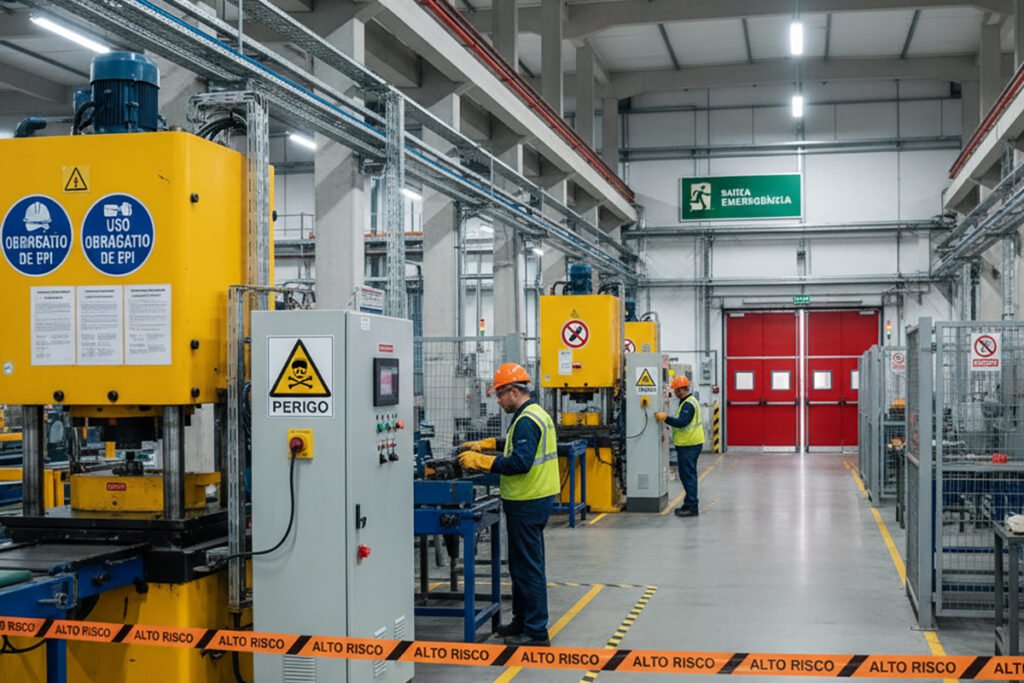
A signaling in electrical panels Safety and maintenance of substations is not optional. It prevents accidents, reduces operational errors, and speeds up maintenance interventions. When it fails, it puts lives at risk and generates unplanned shutdowns.
This guide shows the essentials: what should be included, the most common mistakes, and how to standardize.
Why does the signage fail?
Four main causes:
The system evolves,signalingdoes not include Circuits change, panels are expanded, but the labels become outdated.
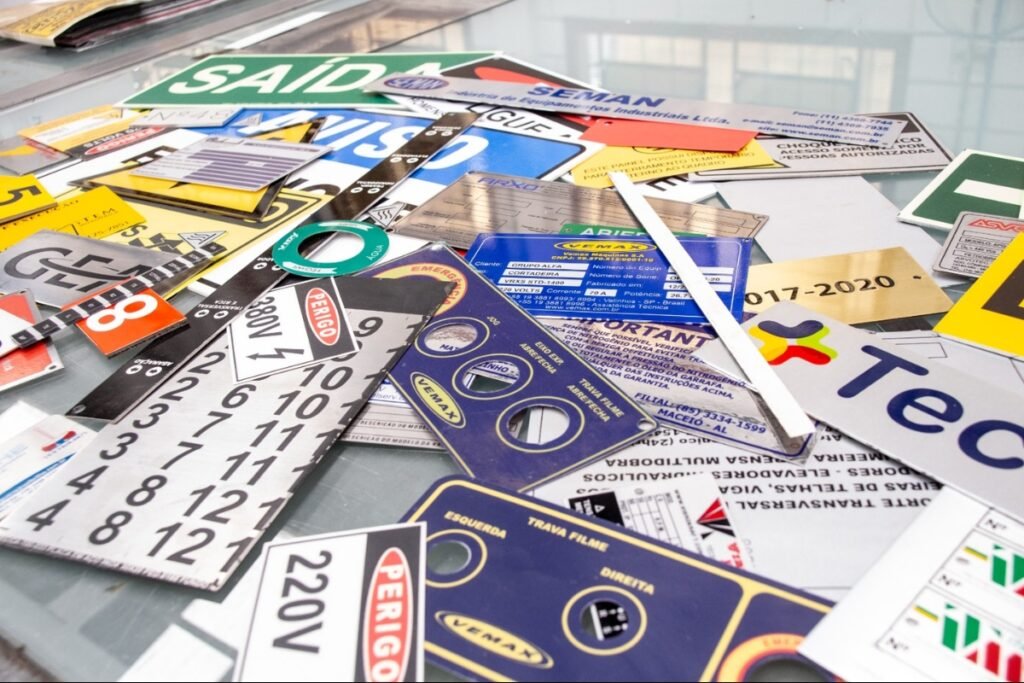
Inadequate material – Common labels do not withstand heat, vibration, dust, or chemicals.
Lack of standardization Each area uses different fonts, colors, and nomenclature.
Just a warning of danger. – There is a lack of functional identification: what it is, where it goes, what it feeds.
What can't be missing
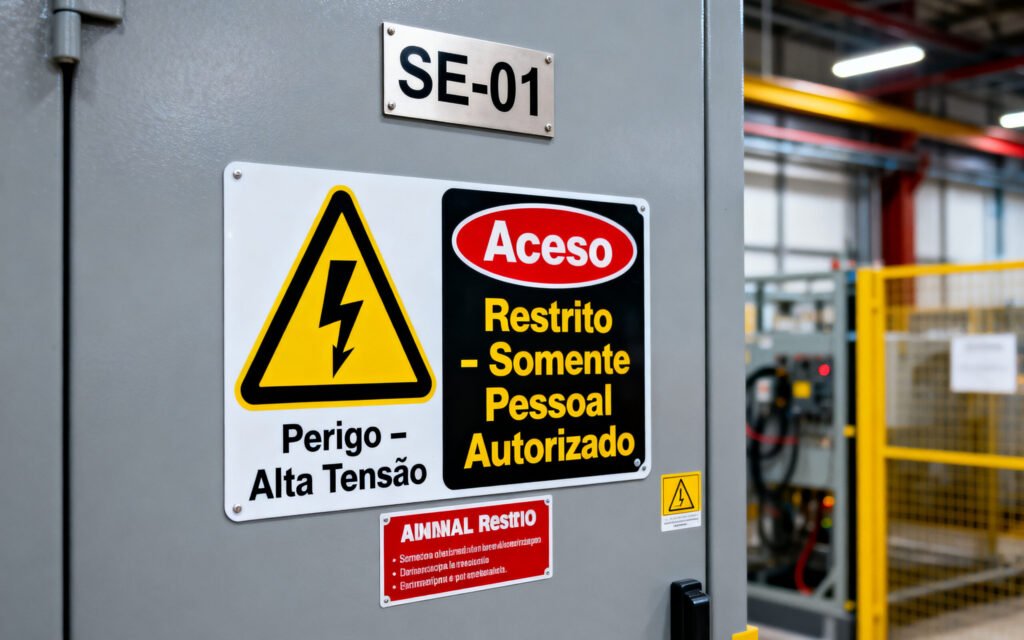
1. Entrance to the electrical room
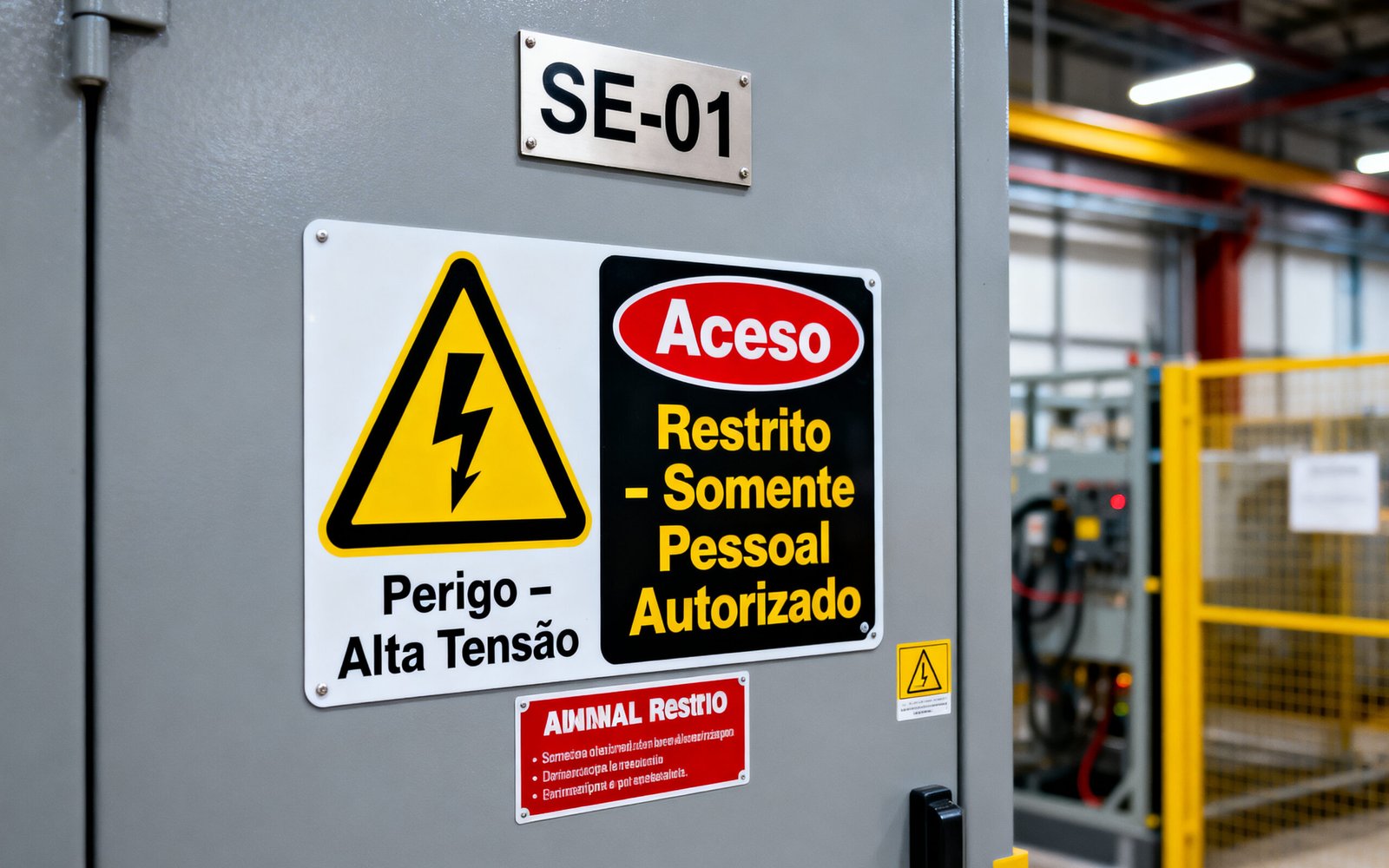
– “Danger – High Voltage” sign with pictogram; – “Restricted Access – Authorized Personnel Only”; – Room identification (e.g., SE-01); – Mandatory PPE (Personal Protective Equipment) when applicable; Emergency contact (optional).
Tip: Use universal pictograms and high contrast (yellow/black).
2. External identification of the panel
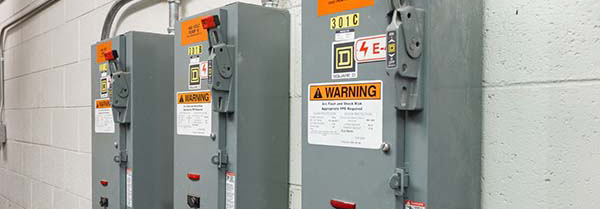
– Unique code (e.g., QGBT-01, CCM-02); – Function/area fed (e.g., “QGBT – Filling Line”); – Nominal voltage (e.g., 380V/220V); – “Do not obstruct – Keep the area clear”.
Tip: The code must be legible from 3 meters away. distance.
3. Circuit identification
– Each circuit breaker/switch with a clear label (e.g., “Pump 01”, “Cabin Exhaust Fan 03”); – Origin/destination when applicable (e.g., “Powered by QGBT-01 – D12”); – Emphasis on critical circuits (IT, security, ventilation).
Tip: Avoid generic names (“Motor 1”, “Outlets”). Be specific.
4. Busbars and grounding
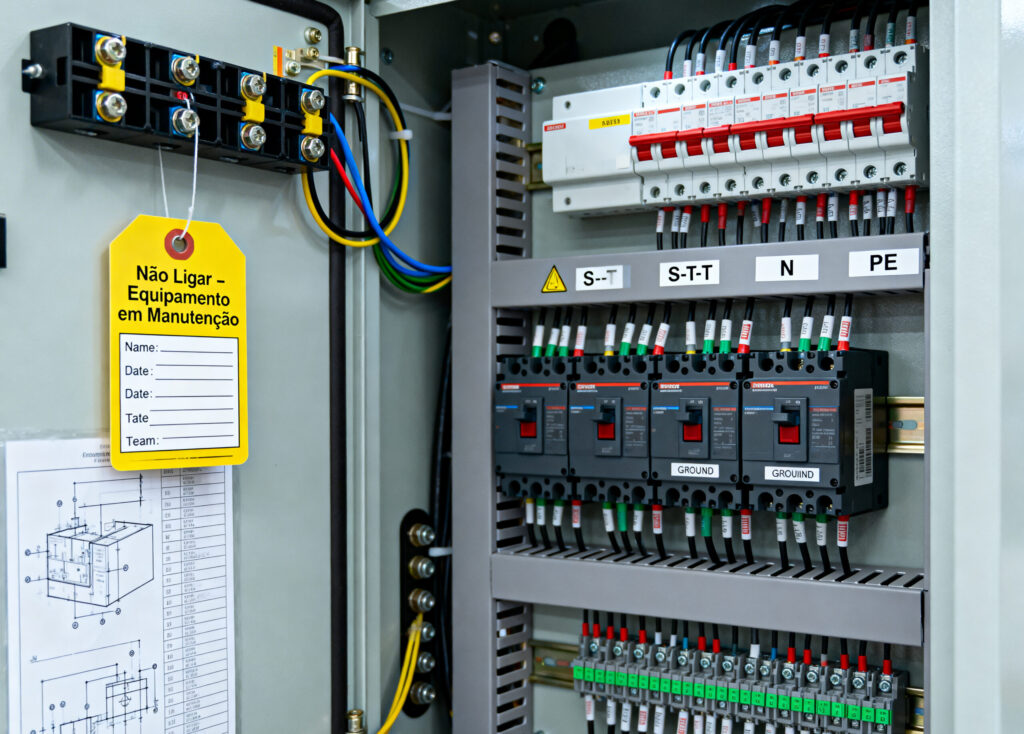
– Phase identification (ABC or RST); – Neutral (N) and ground (PE); – signaling of energized living parts.
Tip: Use the same color scheme across all units.
5. Lockout and hold tags
– “Do Not Connect – Equipment Under Maintenance” with fields for name, date, and team; – Support for LOTO (Lockout/Tagout); – Procedural warnings: “Turn off before opening”, “Wait for discharge”.
Tip: Centralize the control of these labels in the warehouse or PCM (Production Control Management).
6. Internal panel signaling
– Identification of terminals and rails; – Labels on cables and harnesses; Electrical diagram for the inner door; – QR Code for technical documentation (optional).
Tip: If using a QR code, ensure the link is always up-to-date.
7. Substations
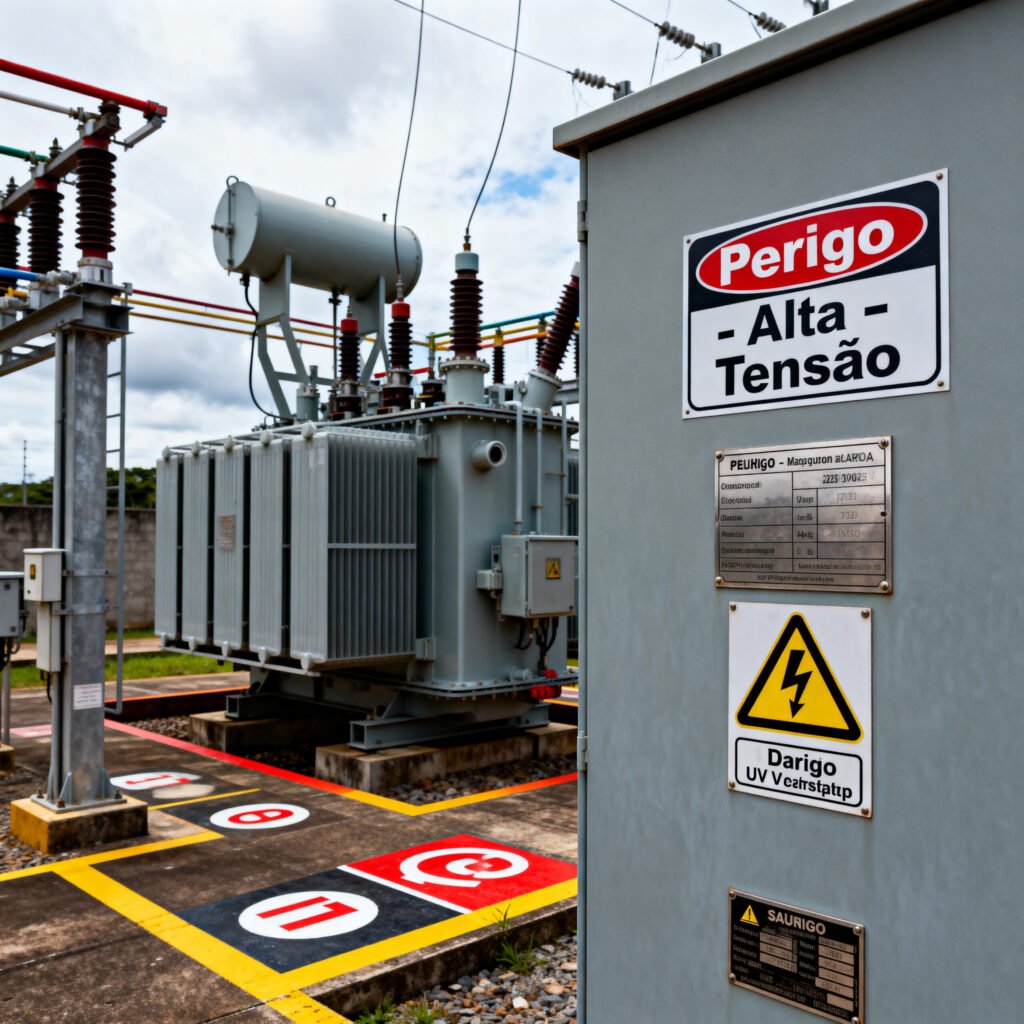
– Signs labeled “Danger – High Voltage” visible from a distance; – Identification of equipment (transformers, circuit breakers, disconnectors); – Internal routes and security areas; – Grounding and switching points; Emergency procedures.
Tip: Use materials that are resistant to UV rays and rain. and temperature variation.
5 common mistakes (and how to fix them)
Labels too small → Scale for reading at 50-70 cm. Sans-serif fonts, minimum 12 pt.
Inadequate material → Use industrial polyester, high-performance adhesive, and lamination. In critical cases, opt for rigid panels with mechanical fastening.
– QGBT and main panels; – Incoming substations; – Panels with more interventions
Conclusion
A signaling Clear visuals reduce risk, speed up maintenance, and improve compliance. The secret: visual standards, appropriate materials, and continuous updates.
A Cooperarts offers technical solutions for signaling Industrial electrical wiring, made with high-performance and durable materials. Contact us for customized specifications.